Barry Cheevers
Cyber Data Analyst
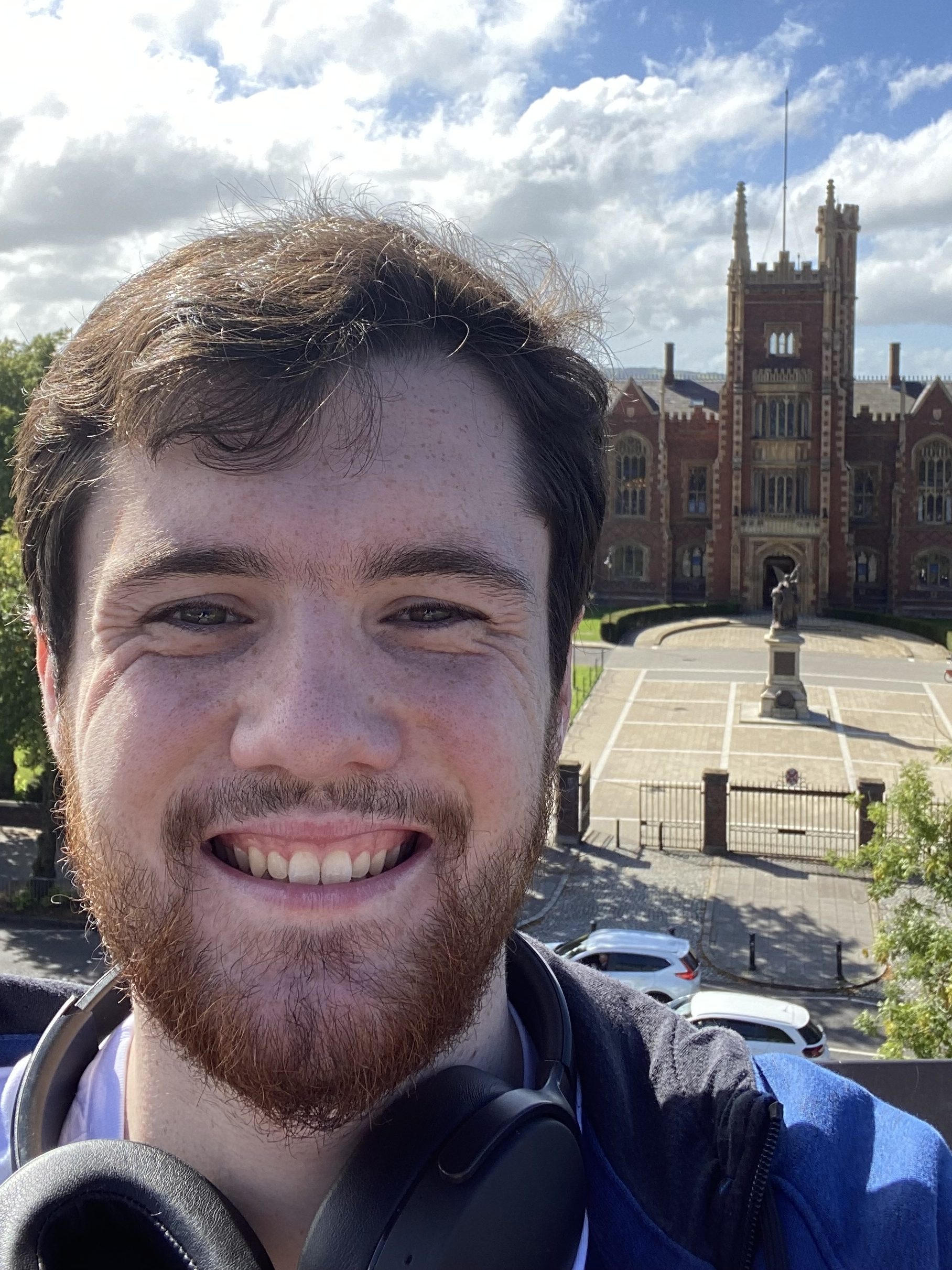
Hello and welcome to my digital space! I’m Barry Cheevers, a Cyber Data Analyst at Anomali and a graduate from Queen’s University Belfast with an MEng in Software Engineering.
At Anomali, I work in cybersecurity with a focus on data-driven detection and analysis, helping to identify malicious behaviour and improve the systems used to detect threats at scale. The role brings together my interest in cybersecurity, analytics, and machine learning, while giving me the chance to contribute to stronger and more effective defence capabilities.
As a student software developer with a strong focus on cybersecurity, I’ve embarked on numerous exciting projects throughout my academic and professional journey. Here, you’ll find a collection of my work, including the world’s first malicious DoH ML pipeline designed for deployment on network systems and innovative solutions like physical fuses for enhancing computer network security.
Beyond showcasing my projects, this website also serves as a hub for my professional endeavours. My comprehensive CV is available for you to explore, detailing my educational background, work experiences, and areas of expertise in the tech industry.
But life isn’t all about code and computers! When I’m not immersed in tech, I find joy in exploring the world of gastronomy and practicing the piano
Thank you for visiting my website. I hope you find inspiration, knowledge, and a dash of entertainment during your stay. Feel free to reach out if you have any questions, collaborations, or just want to say hello.
Recent Posts
-

The OAuth Trust Gap: Why MFA Did Not Save Microsoft 365 Tenants from the ConnectWise Attack
The ConnectWise Cloud Backup incident revealed a structural gap in Microsoft 365 security: when an attacker authenticates as the application rather than the user, MFA and conditional access don’t apply. I wrote this piece for The Dispatch to examine what happened, why detection failed, and what it means for organisations that rely on third-party OAuth…
-

AI Ethics at the Edge of Agency: What Philosophy, Theology, and Common Sense Teach Us About the Limits We Must Set on Artificial Intelligence
As AI systems take on more autonomy in cybersecurity and other domains, the question of who is responsible when harm occurs remains unresolved. This piece examines the philosophical, theological, and governance frameworks trying to fill that gap, and why none of them are quite up to the task yet.
-

Sovereign AI: The Strategic Debt Nations Are Accumulating by Doing Nothing
Why I Wrote This I’ve been thinking for a while about how the AI infrastructure conversation tends to get framed as a technology or economics story, when the more consequential framing is a security and governance one. The question of who controls the compute, the model weights, and the data pipelines that underpin public services…